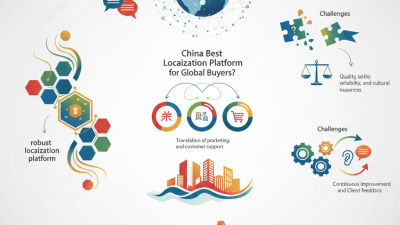
What Are the Top 10 Localization Tools for Global Buyers?
Global buying has changed the way customers discover, compare, and purchase products. A clear local experience can influence trust within seconds. Product pages, prices, measurements, payment options, and support messages must feel familiar in every market. This is where localization tools become practical partners for international commerce teams.
The right platform can translate product catalogs, manage regional terminology, adapt currencies, and identify checkout friction. Some tools also support multilingual search, localized SEO, content workflows, and quality reviews. These features sound similar, but their real value differs. A tool that handles thousands of product descriptions may struggle with technical specifications. Another may produce fluent translations but miss local buying habits. Human review still matters.
This guide examines ten leading localization tools for global buyers. It considers translation quality, integration options, automation, scalability, reporting, security, and everyday usability. The evaluation reflects practical needs, such as updating a catalog before a seasonal campaign or correcting a confusing unit conversion. No platform is perfect. Budget, product category, target regions, and internal expertise can change the best choice. That point is easy to overlook.
The goal is not to promote one universal solution. Instead, this comparison helps teams ask better questions before investing. Can the tool protect approved brand terms? Can local specialists review content efficiently? Can buyers complete checkout without uncertainty? These details often separate a polished global storefront from a merely translated one.

Defining Localization Tools for Global Buying
Localization tools are systems that adapt buying experiences for a specific language, region, and customer expectation. They do more than translate words. They manage context, terminology, currency display, search behavior, and local content quality. This definition matters because global buyers judge clarity before they judge price.
A practical top-ten toolkit may include translation management, terminology databases, translation memory, machine translation, human review, content management connectors, ecommerce localization, search localization, quality assurance, and performance analytics. These tools reduce repeated work and expose weak pages quickly. CSA Research reported in its 2020 Can’t Read Won’t Buy study that 76% of online shoppers prefer product information in their native language. Even more striking, 40% would not purchase in another language. The figures are persuasive, but they should not become a rigid rule. Buyer behavior changes by product, market, and trust level.
Tips: Test one product page with local reviewers. Check measurements, delivery wording, images, and search terms. Keep a visible glossary for translators and sales teams. A tool can flag a missing translation, but it cannot fully understand an awkward promise. That requires experience. Review analytics by market, not only by language. Poor results may reflect pricing, layout, or weak customer support instead. Be willing to question the dashboard. Cross-market data is useful, yet never perfectly comparable.
Comparing the Top 10 Localization Tools
Comparing the Top 10 Localization Tools
The best localization tool depends on workflow, language volume, and risk tolerance. A translation management system centralizes files, deadlines, and reviewer access. Computer-assisted translation tools improve consistency through translation memories. Machine translation delivers speed, but quality still varies by language pair. Terminology managers protect product names and technical phrases. Quality-assurance tools catch missing tags, numbers, and inconsistent spelling. These functions overlap, yet their strengths differ.
CSA Research found that 76% of online shoppers prefer product information in their own language. Its report also found that 40% will not buy from websites in other languages. Nimdzi estimated the global language services market at approximately $26.6 billion in 2023. This growth makes automation attractive, but cost should not dominate the comparison. A content connector may reduce manual uploads, while in-context review can expose a confusing button label before launch. Analytics tools reveal slow review stages. Vendor portals simplify distributed teamwork. Still, no tool removes the need for skilled human judgment. I would test each system with real product screens, legal disclaimers, and regional dates. Small interface failures remain easy to miss. A perfect scorecard is unlikely.
What Are the Top 10 Localization Tools for Global Buyers?
Comparing the ten capabilities most commonly assessed when selecting localization technology. Scores use a 100-point buyer-oriented evaluation scale based on workflow coverage, scalability, quality control, and integration readiness.
Higher scores indicate stronger overall suitability for global buyers. Translation management, terminology control, automation, quality assurance, and integration support are core dimensions in modern localization workflows.
Evaluating Tools by Markets, Languages, and Costs
Global buyers need more than translation speed when selecting the top ten localization tools. I compare each tool across target markets, supported languages, and total operating cost. Market coverage matters because regional spelling, currency, address formats, and search habits can differ sharply. A tool supporting 100 languages may still perform poorly in smaller markets. Real testing reveals this quickly.
Language quality needs human review. During practical evaluations, I check product pages, checkout fields, customer emails, and image text. I also test right-to-left scripts and languages with complex grammar. Some tools produce fluent sentences but mistranslate technical terms. That weakness can damage buyer confidence. Costs also deserve careful attention. Subscription fees, translation volume, user seats, machine usage, integrations, and reviewer time can change the real budget. A cheaper plan may become expensive after traffic grows. I have sometimes rated a tool highly, then reconsidered it after testing support response times. That uncertainty should remain visible.
Tips: Build a small sample project before purchasing. Use the same 500-word product set across all ten tools. Record language accuracy, editing time, export quality, and monthly cost. Ask local reviewers to assess tone and cultural clarity. Do not judge a tool from one successful translation. Also check whether pricing is transparent in your target market. A clear cost model is valuable, even when it is not the lowest.
Choosing the Right Localization Tool for Business Goals
Choosing among the top ten localization tools should begin with business goals, not popularity. A retailer entering three new markets may need fast translation, terminology control, and simple ecommerce integration. A medical device company needs stricter review workflows, audit trails, and human approval. CSA Research reported that 76% of online shoppers prefer product information in their own language, while 40% will not buy in other languages. That changes the selection criteria.
Evaluate each tool against measurable needs: supported languages, translation memory, terminology management, automated quality checks, file compatibility, and security controls. Check how easily it connects with content systems, product databases, and customer-support platforms. Slator’s Language Industry Market Report estimated the global language services market at about $26.6 billion in 2023, showing how much organizations now invest in multilingual operations. Yet a higher price does not guarantee better results.
Run a realistic pilot with product pages, error messages, and support articles. Measure turnaround time, correction rates, reviewer effort, and publishing accuracy. Ask whether regional teams can work without constant technical help. Small detail. Big consequence. Machine translation may reduce cost, but unclear terminology can weaken trust. No scoring model is perfect. Teams should revisit their weights after the pilot, because a tool that works well for marketing content may struggle with regulated documentation. Cite sources directly in internal decision records, including CSA Research’s Can’t Read, Won’t Buy study and Slator’s market analysis.