How to Choose the Best Automated Translation Software for Business?
Choosing the right automated translation software is crucial for businesses in today's global landscape. Language barriers can hinder communication and limit market reach. According to Dr. Helen Harwell, a leading expert in machine translation, "The right software can transform how businesses connect with international clients."
Understanding your needs is essential. High-quality automated translation software should cater to your specific industry. Not all software offers the same accuracy or features. Some tools excel in technical jargon, while others may falter. Reflecting on user reviews can highlight these subtleties.
Integration with current workflows is often overlooked. Many businesses struggle with implementing new software. This could lead to inefficiencies. It's vital to choose a solution that aligns with your existing systems. A thoughtful approach can ensure smoother transitions and better outcomes.
Understanding Your Business's Unique Translation Needs
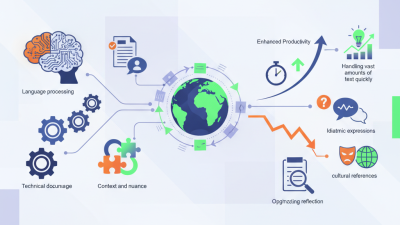
Choosing the right automated translation software requires an understanding of your business's specific needs. Consider the languages you encounter most frequently. Will the software need to handle technical jargon or idiomatic expressions? These factors can significantly impact your choice. Different industries have unique terminology, and a translation tool must adapt accordingly.
Another critical aspect is your audience. Are you translating for internal communications or external marketing? The tone and style can vary greatly. Review the type of content you usually translate. Customer-facing documents may need a more polished approach. In contrast, internal memos can be more straightforward.
Reflect on the scalability of the software as well. Your business may grow, and your translation needs may become more complex. Ensure that the software can manage higher volumes and additional languages over time. It's essential to assess not only current needs but also future demands. Investing in a solution that lacks flexibility might limit your business's ability to expand seamlessly. Always look for solutions that offer a trial period. Testing the software in real scenarios can provide insights into its effectiveness.
Evaluating Different Types of Automated Translation Software
When evaluating automated translation software, consider the various types available. Machine translation (MT) is popular. It processes text quickly and offers immediate results. However, MT can struggle with nuances in language. This can lead to inaccuracies, especially in complex documents. Therefore, it's crucial to assess the context of your translations.
Another category is Neural Machine Translation (NMT). This technology uses algorithms similar to human brain functions. NMT improves fluency and accuracy, producing more natural translations. However, it may require significant resources to implement effectively. Additionally, NMT systems often need continuous updates to maintain their quality.
Finally, hybrid systems combine NMT with human expertise. This approach balances speed with accuracy. Human translators can refine initial translations, ensuring cultural nuances are respected. While this method can be more costly, the reliability often justifies the investment. When selecting a system, reflecting on your specific needs will guide you to the right choice.
Key Features to Look for in Translation Software for Businesses
When selecting automated translation software for business, several key features significantly impact efficiency and accuracy. First, look for user-friendly interfaces. Simplicity promotes faster adoption among employees, leading to improved productivity. According to a recent study by Common Sense Advisory, nearly 75% of users prefer software that is easy to navigate.
Another vital feature is integration capabilities. The best tools seamlessly connect with existing systems. This integration allows smooth data handling and workflow management. For instance, the ability to collaborate across platforms improves the overall translation process. A considerable portion of businesses reported a 30% improvement in project turnaround time when systems are interconnected.
As you evaluate options, consider the software's scalability. A solution should adapt as your business grows. This ensures long-term viability without frequent replacements.
Machine translation quality also matters. Look for systems that utilize neural machine translation. They typically yield higher accuracy than past methods.
Ensure the software offers robust security features. Protecting sensitive data is crucial. Cybersecurity breaches can lead to expensive consequences. A significant 60% of businesses recover from data breaches at a substantial cost, underscoring the need for reliable software.
Comparing Pricing Models: Which Best Suits Your Budget?
When selecting automated translation software, pricing models can vary significantly. Some platforms charge per word, while others may offer subscriptions. Understanding these options can help businesses align their translation needs with their budget.
Cost-per-word can be effective for smaller projects. It ensures you pay only for what you use. However, for ongoing work, a subscription might be more economical. Subscriptions often include added features, like collaboration tools, which can enhance workflow. Evaluating these models is crucial for making a financially sound decision.
Budget-conscious businesses should assess their translation volume. If you anticipate substantial content, a flat-rate model could be beneficial. Balance quality and cost; cheaper options might compromise accuracy. Some platforms may offer free trials. Take advantage of these to test usability and translation quality before committing. Ensure you consider both current needs and future growth potential. Always be cautious when evaluating very low-cost services, as the quality might suffer.
How to Choose the Best Automated Translation Software for Business? - Comparing Pricing Models: Which Best Suits Your Budget?
| Features |
Basic Plan |
Standard Plan |
Premium Plan |
| Monthly Price |
$15 |
$30 |
$50 |
| Languages Supported |
5 |
20 |
50+ |
| Translation Speed |
1,000 words/hour |
5,000 words/hour |
10,000 words/hour |
| APIs Available |
No |
Yes |
Yes |
| Customer Support |
Email Only |
Email & Chat |
24/7 Support |
| Translation Quality |
Basic |
Good |
Excellent |
Assessing User Reviews and Case Studies for Software Selection
When considering automated translation software for business, user reviews can be invaluable. Collecting feedback from current users reveals practical insights. Look for recurring themes in their experiences. Are they satisfied with the accuracy of translations? Do they find the software easy to use? Negative reviews often highlight common pitfalls. Take note of these issues to avoid potential disappointments.
Case studies offer deeper insight into how software performs in real-world scenarios. They illustrate practical applications and outcomes. Understanding how different industries utilize the software can inform your choice. Some case studies may show enhanced efficiency in translation processes. Others might reveal unexpected challenges faced during implementation.
As you analyze reviews and case studies, remain critical. Not all feedback will align with your needs. Some users may have different requirements or expectations. Therefore, consider gathering diverse opinions. This ensures a well-rounded understanding of the software's capabilities and limitations.