2026 How to Choose the Right Localization Agency for Your Business?
In an increasingly globalized world, choosing the right localization agency is a crucial step for businesses. A successful localization effort goes beyond mere translation; it involves adapting content to fit cultural contexts. Companies need to communicate effectively with diverse audiences. The right localization agency can help bridge language gaps and enhance brand visibility.
Finding the right partner, however, is not always straightforward. Many agencies claim to offer localization services, but not all are created equal. It’s important to consider their expertise in your industry. Assess their track record and past projects. Check their understanding of local markets and cultures. This diligence can save time and resources.
Reflect on what your business truly needs. Do you require specialized knowledge or a broad approach? Clarity in your objectives will guide your choice. Establish clear criteria for evaluation. A thorough vetting process can lead to a more successful collaboration. Ultimately, the right localization agency could be your key to global success.

Understanding the Importance of Localization for Businesses
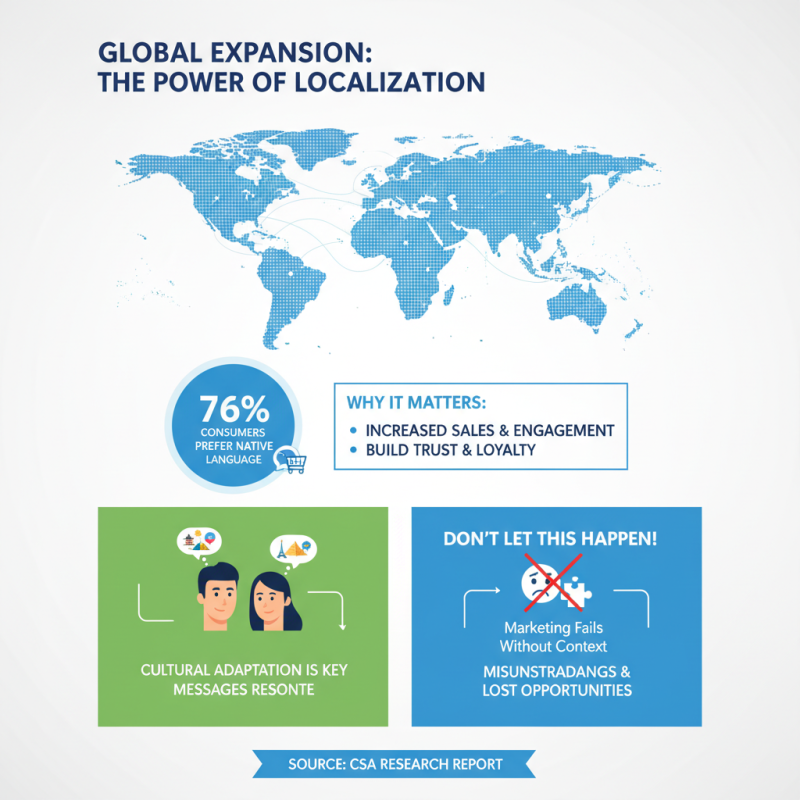
Localization is crucial for businesses aiming to expand into new markets. According to a report by CSA Research, 76% of consumers prefer to buy products in their native language. This preference underscores the significance of tailoring content to cultural contexts. For example, a marketing campaign that resonates in one country may fall flat in another due to cultural differences.
Effective localization goes beyond mere translation. It requires an understanding of local customs, trends, and consumer behavior. Data from Common Sense Advisory shows that 40% of internet users won't engage with content that isn't in their language. This disconnect often leads to missed opportunities. Companies must acknowledge that localization is not just a box to check; it is a strategic investment.
Yet, many businesses still underestimate this need. A lack of investment in localization can result in negative brand perception. It's essential to reflect on how localization efforts could improve customer satisfaction. The right agency can help navigate these challenges. Engaging with a competent localization partner can elevate a brand's presence in international markets. This partnership should ensure that messages resonate with diverse audiences effectively.
Identifying Your Business's Localization Needs and Goals
When choosing a localization agency, identifying your business's needs is crucial. Consider the languages you want to target. Do you need translation, or is cultural adaptation important? Think about your audience's preferences. Are they in one region or many countries? Knowing this will guide you in selecting the right agency.
Set clear localization goals. Do you want to enter a new market or enhance your existing presence? Each goal requires different strategies. Explore what metrics matter to you. It could be user engagement or sales growth. Reflect on past localization projects. What worked, and what didn’t? Revisiting these experiences can be enlightening.
Collaboration is key in localization. You must communicate your vision and expectations. Is the agency willing to adapt? Do they understand your brand? A mismatch can lead to issues. Consider how flexible they are with their services. Transparency during the process is also vital. How will they handle challenges? A proactive approach can save you time and resources.
Key Factors to Consider When Selecting a Localization Agency
Choosing the right localization agency is crucial for global success. Companies that localize can see a revenue increase of up to 30%. Understanding key factors can help you make an informed decision.
First, consider the agency’s industry experience. Agencies specializing in your field understand nuances and terminology better. Look for
case studies and testimonials that reflect their knowledge.
Communication is vital. A responsive agency can address your needs swiftly. Ensure they can communicate effectively in your target languages.
Don’t overlook their technological capabilities. Tools like CAT (Computer-Assisted Translation) can enhance efficiency. A recent survey indicated that
75% of businesses value technology in localization.
Tips: Always ask for a trial project. It reveals the agency’s workflow and quality. Also,
observe how they handle revisions. An agency that is rigid might not adapt well to your feedback.
Lastly, assess their cultural understanding. Localization is not just about translation. It’s about resonating with local audiences. An agency with
cultural expertise can enhance your brand’s image globally. Remember, the right agency can be a
game changer for your brand in different markets.
Evaluating the Expertise and Experience of Potential Agencies
Choosing the right localization agency for your business is crucial. Evaluating the expertise and experience of potential agencies can prevent costly mistakes. Start by reviewing their portfolio. Look for previous projects that align with your industry. If they have worked with similar businesses, it’s a promising sign. Ask about their linguistic skills. Are their translators native speakers? This is vital for cultural nuances.
Consider their team composition. A good agency should have diverse skills. From project managers to subject matter experts, the team should reflect a blend of talents. Check their certifications. These often indicate commitment and professionalism. Contact references to hear about their experience. Were deadlines met? Did they provide quality work?
Don’t ignore potential red flags. If an agency lacks clear communication or is evasive with information, reconsider. The right agency will be transparent. They should welcome questions and provide thorough answers. Balancing experience with a personal touch can be challenging. But it's essential for successful localization.
2026 How to Choose the Right Localization Agency for Your Business?
| Criteria |
Description |
Evaluation Score (1-10) |
Comments |
| Industry Expertise |
Experience in your specific industry. |
8 |
Strong background in tech and finance sectors. |
| Languages Offered |
Number of languages supported by the agency. |
7 |
Good range, missing some less common languages. |
| Translation Technology |
Use of translation management systems and CAT tools. |
9 |
Utilizes advanced tools for efficiency. |
| Client References |
Feedback from current and past clients. |
8 |
Positive reviews; strong reputation. |
| Cultural Adaptation Skills |
Ability to localize content culturally. |
8 |
Good understanding of cultural nuances. |
Establishing Effective Communication and Collaboration with Your Agency
Effective communication is crucial when partnering with a localization agency. It sets the tone for the entire project. Make your expectations clear from the start. Share your goals and target audience specifics. This helps in tailoring the localization efforts to meet your needs. Regular check-ins can enhance understanding. You should address any concerns promptly. Miscommunication can derail even the best efforts.
Collaboration goes beyond just sharing information. It requires building trust. Schedule brainstorming sessions where your team and the agency can exchange ideas. Utilize collaborative tools for real-time feedback. These tools can bridge gaps and improve workflow. Always remain open to suggestions; the agency may have insights based on their experience.
It’s also important to recognize that challenges can arise. Deadlines may be tight, or cultural nuances may complicate translations. Be prepared for setbacks. Reflect on what could improve future projects. Every experience with the agency can teach you something valuable. Embrace these lessons to strengthen the partnership. Communication and collaboration are ongoing processes that evolve over time.
2026 Localization Agency Selection Criteria