2026 Top Trends in Website Localization for Global Success
In today's global market, website localization has become essential for success. Companies that invest in effective localization see a significant return on investment. According to the Globalization and Localization Association, businesses that localize their websites grow their revenue by an average of 25%. This trend emphasizes the importance of adapting content to resonate with local audiences.
Expert Jane Smith, a leading figure in the localization industry, states, “Localization goes beyond translation; it’s about cultural relevance.” Many brands still overlook this aspect. They translate text without considering cultural nuances. This can lead to messaging that feels foreign or untrustworthy to local users.
Moreover, a recent survey revealed that 56% of consumers prefer to purchase from websites in their native language. Ignoring this preference could result in lost opportunities. Localizing websites requires understanding regional cultures, values, and preferences. It challenges businesses to reflect on how they engage with diverse audiences effectively. Embracing this challenge is vital for global growth in 2026 and beyond.

Emerging Technologies Influencing Website Localization in 2026
Emerging technologies are transforming the landscape of website localization. In 2026, artificial intelligence continues to play a major role. AI tools are now capable of providing instant translations, but they are not perfect. Misinterpretations can occur. Relying solely on AI may risk cultural nuances. Human oversight remains crucial.
Another key trend is the use of augmented reality (AR) in localization efforts. AR can create immersive experiences for users, enhancing engagement. However, to implement this effectively, brands must understand local cultures deeply. Failing to do so could alienate potential customers. Some users may feel overwhelmed by complex interfaces, which could affect their experience negatively.
Furthermore, adaptive design is gaining traction. This approach customizes content delivery based on the user's location and preferences. While personalization can be powerful, it also raises concerns about privacy. Users may hesitate to share data. Hence, a delicate balance is necessary to ensure user trust while providing a tailored experience. The path ahead is exciting, yet it contains challenges that require ongoing reflection and adjustment.
2026 Top Trends in Website Localization
This chart illustrates the anticipated impact of emerging technologies on website localization trends in 2026.
Cultural Adaptation Strategies for Diverse Markets and Audiences
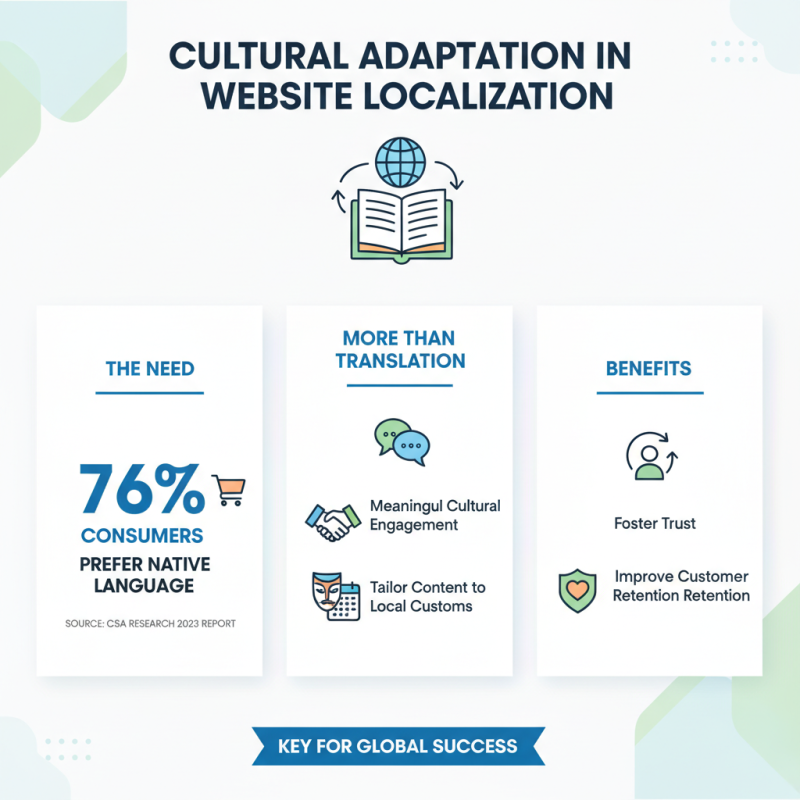
Cultural adaptation is essential for effective website localization. In 2023, a report by CSA Research revealed that 76% of consumers prefer to purchase products in their native language. This highlights the importance of not just translation, but meaningful cultural engagement. Tailoring content to local customs can foster trust and improve customer retention.
Visual elements also matter. A study by the Common Sense Advisory found that 40% of users will abandon a site if it doesn’t seem localized. Images, colors, and symbols must resonate with local audiences. For instance, using local celebrities can increase relatability. Yet, brands often overlook regional nuances, leading to misinterpretation and even backlash.
Another challenge is maintaining brand consistency while adapting to local cultures. Brands may unintentionally present mixed messages. For instance, humor or sarcasm in one culture can be offensive in another. Adapting messaging can be a fine line to walk. Local testing and feedback are vital, as what works in one market may not in another. Balancing global branding with local relevance requires ongoing reflection and adjustment.
The Role of AI and Machine Learning in Streamlining Localization
The rise of artificial intelligence and machine learning is transforming website localization. Businesses are now able to engage diverse audiences more effectively.
AI algorithms analyze user behavior. They adapt content in real-time based on preferences. This capability enhances the user experience significantly.
However, reliance on AI can sometimes overlook cultural nuances. Machine learning may misinterpret local customs or idioms. Some phrases don’t translate well.
Automated translations can feel robotic or unnatural. This might alienate potential customers. Thus, human oversight remains crucial in the localization process.
As brands aim for global success, balancing technology and human touch is vital. AI can streamline workflows and reduce costs. Yet, reviews from native speakers are still essential. Continuous learning from feedback will refine AI systems. This interplay can create a more authentic connection with audiences worldwide.
Best Practices for Multilingual SEO in Global Website Strategy
In today's digital landscape, multilingual SEO is crucial for global success. Website localization goes beyond translation. It involves adapting content for cultural relevance and usability. Each market has its own preferences. Content must resonate with local audiences.
Tips: Conduct thorough keyword research for each language. This ensures you're not just translating but also optimizing. Engage native speakers for accurate context. Automated translation tools can miss nuances that only a local speaker understands.
Localization should adapt visuals too. Colors and imagery can carry different meanings worldwide. Ensure your design is culturally appropriate. This helps in avoiding potential misunderstandings or negative impressions. Track user behavior to refine your approach.
Tips: Use A/B testing to see what works best in different regions. This trial-and-error method can lead to better engagement. Remember, localization is a continuous learning process. Regularly update your strategies based on feedback.
Trends in User Experience Design for Localized Websites in 2026
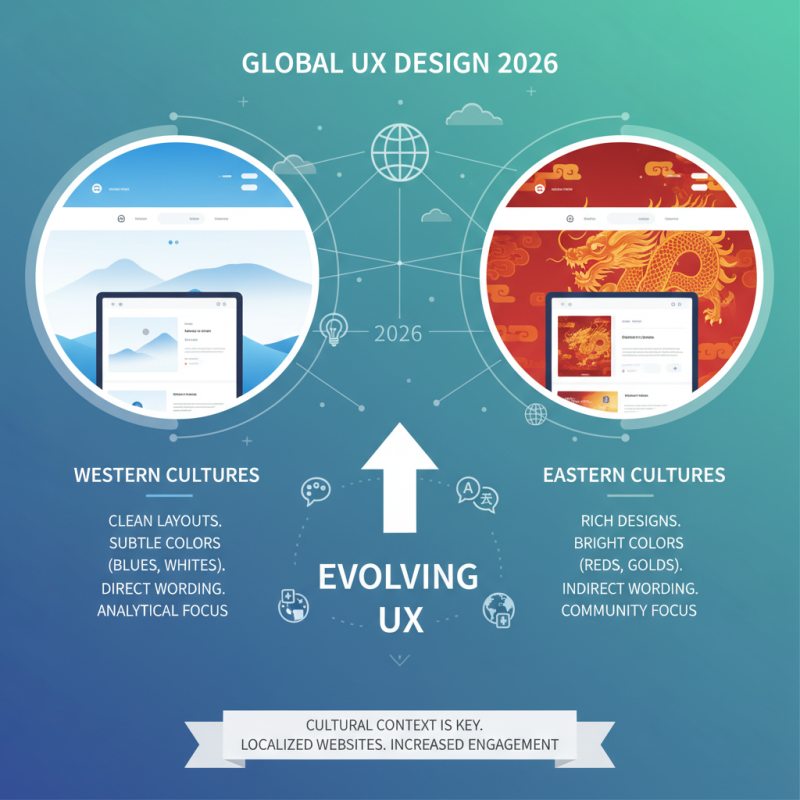
In 2026, user experience design is evolving rapidly for localized websites. Designers focus on cultural context. Colors, imagery, and wording matter more than ever. What works in one culture may not resonate in another. For example, bright colors may delight one audience but overwhelm another. Sensitivity to these differences is critical for success.
Micro-interactions also play a key role. These small details, like button animations or loading indicators, enhance engagement. They provide joyful moments during user interaction. However, poorly designed micro-interactions can frustrate users. A simple delay in response can lead to abandonment. It's an area where many teams struggle, needing continuous improvement.
Accessibility remains a vital element. Designing for different abilities is not just a checkbox. Websites must cater to various languages and reading levels. This can be challenging, especially in multilingual contexts. A user-friendly design should consider all users. Reflecting on these aspects will lead to more effective localized websites in 2026.