2026 Best TMS Translation Management System for Efficient Workflow?
In today’s fast-paced global market, efficient communication is key. The TMS translation management system emerges as a crucial tool for businesses that need to manage translation projects effectively. It streamlines workflow, ensuring that teams can collaborate seamlessly across borders. However, not all TMS solutions are created equal.
When evaluating the best TMS translation management system for 2026, it’s essential to consider various factors. These include user-friendliness, integration capabilities, and support services. Many users report frustration with systems that lack intuitive interfaces. This can lead to wasted time and misunderstandings in teams.
Additionally, scalability is a vital aspect. As companies grow, their translation needs expand too. A system that works today may not suffice tomorrow. Businesses must reflect on their future needs while choosing a TMS. Balancing efficiency and usability is often challenging. Yet, finding the right solution is critical for success in global translation efforts.

Overview of Translation Management Systems (TMS)
Translation Management Systems (TMS) play a crucial role in the modern translation workflow. They streamline processes and enhance collaboration among teams. These systems help manage translation projects, ensuring deadlines are met while maintaining content quality. They offer features like project tracking, file management, and support for various file formats.
However, not all TMS solutions are perfect. Some may lack integration with other tools or have a steep learning curve. Teams might find it challenging to adapt if the system is overly complex. It’s important to evaluate how a TMS aligns with your specific needs. User feedback can provide insights into what to expect.
Choosing the right TMS requires careful consideration. Look for a system that prioritizes usability and efficiency. It should support scalability as your projects grow. Thoughtful selection can lead to significant improvements in workflows and project outcomes.
Key Features to Consider in a TMS for 2026
When selecting a translation management system (TMS) for 2026, certain key features will significantly enhance your workflow. One crucial aspect is integration capabilities. A TMS should seamlessly connect with other tools, like content management systems and localization platforms. This connectivity saves time and reduces redundancy. The interface must be user-friendly, but too much simplicity can lead to underutilization of powerful features.
Consider how a TMS handles collaboration. Real-time collaboration tools are essential. They enable translators, editors, and project managers to work together efficiently. However, not all systems offer the same level of interaction. A lack of effective communication can lead to misunderstandings and delays. Look for systems that provide clear feedback mechanisms.
Scalability is another feature to examine closely. As your projects grow, your TMS should adapt without losing performance. Be cautious; some systems may claim scalability but falter under pressure. Testing the system in real scenarios is advisable. An efficient TMS will not only support large volumes but also maintain accuracy and speed. Evaluate the reporting and analytics features too. They should offer insights into productivity and project timelines. But beware, excessive data can overwhelm users, leading to decision fatigue.
Top TMS Solutions Available in 2026
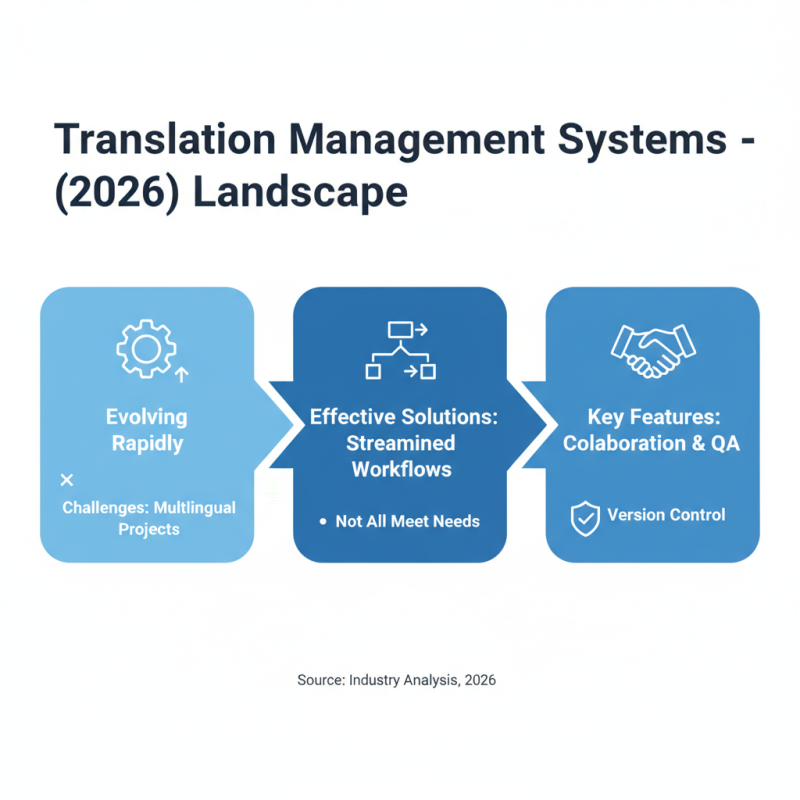
In 2026, the landscape of Translation Management Systems (TMS) is evolving rapidly. Many organizations face challenges in managing multilingual projects. Effective TMS solutions streamline workflows, yet not all meet the diverse needs of users. The best systems should facilitate collaboration. They must also provide tools for quality assurance and version control.
Among the top TMS solutions, features matter greatly. User-friendly interfaces can significantly enhance productivity. Integrations with other tools are critical, yet some platforms struggle here. The ability to customize workflows is essential for many teams, but this can also lead to complexity. It’s a balancing act between flexibility and usability.
In addition to efficiency, scalability is important. Teams should consider whether a TMS can grow with their needs. Some systems may fit small projects but fail with larger scales. User feedback is invaluable in this context. Often, teams wish for more intuitive navigation and reporting features. Understanding these nuances helps organizations make informed decisions.
Comparative Analysis of TMS for Efficient Workflow
The translation management system (TMS) landscape is evolving. Companies increasingly rely on TMS to streamline workflows. A recent report shows that 75% of organizations prioritize efficient translation processes. This trend highlights the need for effective tools.
A comparative analysis of TMS tools can reveal significant differences in features. Some systems offer automation, while others focus on collaboration. User experience can vary widely. An ideal TMS should balance these factors. Reports indicate that companies using advanced TMS see a 40% increase in productivity. Yet, many tools still have learning curves that can hinder performance.
Tips: Seek user feedback before choosing a TMS. Look for trials or demos to assess usability. Remember, not every tool fits every team. Customization may be necessary to achieve optimal results. Additionally, consider the integration capabilities of the system. Disjointed software can slow down workflows. A seamless connection with existing tools is crucial for success.
2026 Best TMS Translation Management System for Efficient Workflow
Future Trends in Translation Management Systems
The landscape of Translation Management Systems (TMS) is rapidly evolving. Future trends indicate a shift towards increased automation. According to a recent industry report, around 70% of translation tasks are expected to be automated by 2026. This transformation will likely change how translators and businesses approach workflows.
Machine learning will play a significant role, enhancing translation accuracy over time. However, reliance on technology presents challenges. Human translators may feel marginalized as their roles shift. Integration of AI can lead to oversights, especially in nuanced translations. A balanced approach is necessary to ensure quality.
Collaboration tools within TMS are improving. Real-time communication is valuable for global teams. Yet, many organizations struggle with implementing these systems effectively. Data from a 2023 survey reveals that 60% of companies report workflow inefficiencies. Investing in training and support may help address these gaps. The future of TMS looks promising but requires thoughtful adaptation.